Friday, November 13, 2015

Prem Ratan Dhan Payo review

Fox Star Studios and Rajshri Productions (P.) Ltd.’s Prem Ratan Dhan Payo is a family drama. It is the story of a prince, a princess and a commoner.
Yuvraj Vijay Singh (Salman Khan) is a prince who lives in Pritampur. He is engaged to be married to princess Maithili (Sonam Kapoor) of Devgadh, who is a free-spirited girl with her family values intact. Maithili runs an NGO, Uphaar Foundation, which helps the poor. In another town lives Prem (Salman Khan), better known as Prem Dilwala because of his large-heartedness. He and his bosom pal, Kanhaiya (Deepak Dobriyal), act in Ram Leela stage shows. Prem also contributes to Uphaar by collecting money from those who can afford to donate.

Vijay Singh has a step-brother, Ajay Singh (Neil Nitin Mukesh), who was born to his father (Sameer Dharmadhikari) and another woman. Vijay Singh also has two step-sisters, Chandrika (Swara Bhaskar) and Radhika (Aashika Bhatia), from another of his late father’s alliances. Although Vijay Singh cares and loves his step-siblings and wants to stay together with them in peace and harmony, just as his late father had hoped, he is aware that they are against him for different reasons. Ajay Singh resents the fact that as per their late father’s wishes, every bill of his has to be passed by elder brother Vijay Singh. Chandrika and Radhika hate Vijay Singh because they are extremely bitter about the fact that their mother never got to live in the palace and now, they don’t have money to lead the luxurious life being led by Vijay Singh. Since Chandrika is a self-respecting girl, she works in a school in Pritampur to make ends meet.

Preparations are afoot for Vijay Singh’s raj tilak.Maithili is due to attend the same at Pritampur. Prem gets wind of this and sets out for Pritampur with friend Kanhaiya just so that he can personally hand over the donation money to Maithili whom he admires.
Here, in Pritampur, Vijay Singh meets with a life-threatening accident. Although doctors manage to save his life, he is unconscious and it is clear that he would not be up on his feet for his own raj tilak.The royal diwan (Anupam Kher) and the royal chief security officer (Deepraj Rana) are among the few loyalists of the palace who have Vijay Singh and the royal family’s good at heart. They hide the fact about Vijay Singh’s accident from the world as it would create a bad impression on the foreign media and guests from the world over, who are expected to attend the raj tilak ceremony. They don’t intend to even reveal the news of the accident to Maithili.

Seeing the very similar-looking Prem Dilwala in Pritampur, the diwan and the security officer prepare him to pose as Vijay Singh not just in front of Maithili but also before the world till the real Vijay Singh is fine and ready to come in front of the world. Maithili, who has not been happy with Vijay Singh’s ways – probably because Vijay Singh himself has been extremely worked up about the tension in his family – begins to see a marked change in his behaviour and attitude. Of course, that’s because what she is getting to see is Prem’s humane side which she mistakes to be Vijay Singh’s transformation. Maithili now begins to love ‘Vijay Singh’ like never before. On his part, the conscientious Prem is aware of his limits and refrains himself from getting too close to her.
Soon, Prem learns of the tension in the royal family and takes it upon himself to bring the family together again. But as if this itself is not a Herculean task, Vijay Singh is kidnapped by step-brother Ajay Singh.

Will Prem be able to ensure Vijay Singh’s freedom or will Ajay Singh kill his step-brother? Does Maithili get to know that the person she has begun to love is Prem and not Vijay Singh? Does Maithili marry Vijay Singh or Prem? Does the royal family unite and live happily ever after?

Sooraj Barjatya has written a story which may not have great novelty but it, nevertheless, has its heart in the right place. The drama has romance, light moments and superb family emotions. The first half gets a little boring at places as the real drama comes only after interval. But once the second half begins, the film moves like a rocket, consuming the viewers completely for its terrific emotional appeal. The screenplay, also penned by Sooraj Barjatya, is entertaining and engrossing, more for the family audience and the viewers in cities other than the metropolitan cities and for audiences in towns and villages but a bit less for the youngsters. If the light moments bring a smile on the audience’s lips and intermittent laughter too, the emotional scenes shake them and move them to tears. In particular, the following scenes will activate the tear ducts of the viewers for sure: the one in which Prem, posing as Vijay Singh, announces that he was not just giving up his palace for sisters Chandrika and Radhika but has also made them equal partners in all his businesses and co-owners in every single property of his; the scene in which Prem Dilwala advises Vijay Singh to be a good husband; the scene in which Vijay Singh and Prem argue about family as a unit; the one in which the Bhai-doojfestival is celebrated; and, most importantly, the scene in which Prem bursts into tears when the diwan tells him that he had not got married as he never had the time which got consumed in serving the king and his family. It would be appropriate to add here that the angle of Vijay Singh and his step-sisters is the best part of the film, besides the changing attitude of Maithili in her romantic drama. The climax is very touching and also extremely fulfilling. Aash Karan Atal’s dialogues are mind-blowing and many dramatic and serious ones are so profound that they touch the heart and leave an indelible mark on it.

Salman Khan looks like a million bucks in both the roles and acts like he has rarely acted before. The honesty and integrity on his face add so much to the two characters that they force the audience to believe in the drama. To say that he is extraordinary in emotional scenes would not be an exaggeration. His look with fondness when he, as Prem Dilwala, is bidding goodbye to Maithili from the car’s front seat is to die for. In the light scenes, he is just too endearing. All in all, it wouldn’t be wrong to say that he carries the film on his shoulders. Sonam Kapoor looks glamorous and acts well. She is especially good in the emotional scene in which she overhears the conversation between Vijay Singh and Prem Dilwala. Neil Nitin Mukesh does an ordinary job and doesn’t really add much to the character of Ajay Singh with his performance. Swara Bhaskar is first-rate, making every scene of hers truly good. Anupam Kher lives the role of the loyal royal diwan. He is very nice. Deepak Dobriyal is cute and has his moments. Aashika Bhatia makes her presence felt as Vijay Singh’s younger step-sister, Radhika. Deepraj Rana is dignified and efficient as the palace security chief. Armaan Kohli is average as the CEO of Vijay Singh and the scheming friend of Ajay Singh. His villainy doesn’t have the venom it needed to have. Samaira Rao, as Vijay Singh’s secretary, is alright. Suhasini Mulay leaves a mark in a very brief role in special appearance. Sameer Dharmadhikari is okay in a special appearance. Lata Saberwal Seth (as Chandrika’s mother), Karuna Pandey (as Maharani), Brijendra Kala, Vishwa Badola, Mukesh Bhatt (as Chhuttan), Gurpal Singh (as Sardarji), Sucheta Khanna (as Sardarni), S.M. Zaheer (as doctor), Mickey Makhija (as the second doctor), master Dhruv Vinay Kumar (as young Vijay Singh), master Darsheel Vinay Kumar (as young Ajay Singh), baby Miraya Suri (as young Chandrika) and baby Hridaan V. Surana (as young Radhika) lend able support.

Sooraj Barjatya’s direction is splendid. He has handled the film with the maturity, understanding and sensitivity needed for such a drama. His honesty is reflected in every single scene of the film. He has extracted great work from out of his hero and has catered completely to the family audience. But in the process, he will lose out on a part of the youth audience which may not be able to identify with a pure character like that of Prem Dilwala and with so much of family drama. It must be added here that the traditional audience, which frequents cinemas once in, say, five or seven years, will find the film made to their liking. Music (Himesh Reshammiya) is good but, again, it caters to the family audience rather than the youth. The title song, of course, is already a major hit and it will soon become the wedding song of the season. ‘Jalte diye’, ‘Jab tum chaho’ and a couple of other songs are melodious. Irshad Kamil’s lyrics are truly superb. Shabina Khan’s choreography in the title track is extraordinary. Her choreography of the other songs and the choreography by Radhika Rao-Vinay Sapru in one song and by Ahmed Khan in another song is appropriate. Himesh Reshammiya and Sanjoy Chowdhury’s background music is just too brilliant. V. Manikandan’s camerawork is marvellous. Nitin Chandrakant Desai’s sets are opulent. Action scenes, choreographed by Greg Powell and Kaushal-Moses, are appropriate. Sanjay Sankla’s editing is crisp.

On the whole, Prem Ratan Dhan Payo will be loved by one section of the audience and will not find favour with youngsters initially, but it will, in the final tally, emerge as a comfortable box-office winner for all concerned. It will do huge business at the ticket windows. Despite its high cost (investment of Fox is to the tune of Rs. 235 crore), profits are assured. In fact, the film may go on to earn very well if the ladies audience patronises it in a big way – which is a very big possibility.

On the whole, Prem Ratan Dhan Payo will be loved by one section of the audience and will not find favour with youngsters initially, but it will, in the final tally, emerge as a comfortable box-office winner for all concerned. It will do huge business at the ticket windows. Despite its high cost (investment of Fox is to the tune of Rs. 235 crore), profits are assured. In fact, the film may go on to earn very well if the ladies audience patronises it in a big way – which is a very big possibility.

Friday, October 16, 2015

WEDDING PULLAV movie review

WEDDING PULLAV


Eros International and GR8 Entertainment’s Wedding Pullav (UA) is a love story. Adi (Diganth Manchale) and Anushka (Anushka Ranjan) are very close friends. Adi is due to get engaged to Rhea (Sonali Seygal). He is thrilled when Anushka makes it for the engagement ceremony at the last moment. Even as preparations are on for the grand wedding a few days later, it is decided by Anushka’s family that her marriage with boyfriend J (Karan V. Grover) should also be solemnised at the same time. J comes from abroad for his wedding.

The functions leading to the two weddings and the time the people spend together makes both, Adi and Anushka, realise that they actually are more than just good friends, that they love one another. Some elders in the families of Adi and Anushka also realise this and so do Rhea and J. But nobody is willing to say this. Probably, Adi is too indebted to Rhea’s father, Kumar (Parmeet Sethi), for having given him a chance to realise his long-cherished dream of designing a motorcycle and hence cannot muster courage to call off his impending marriage with Rhea. On her part, Rhea loves Adi so much that she is in denial mode and wants to dismiss off the sparks between Adi and Anushka as nothing more than two friends being very close to one another. Anushka is hesitant to make the first move.

What happens thereafter? Are the marriages stalled or do they get solemnised as per plans? Does anybody try to present the real picture before the rest? Who is he/she?

Pooja Verma’s story is oft-repeated and moves on the predictable path without offering any novelty. The screenplay, written by Shashi Ranjan, Pooja Verma and Rahul Patel, is as routine as routine can be. The elders in the families of Adi and Anushka realise that both are in love with one another but they, quite stupidly, refuse to come forward and stop the impending catastrophe if the two were to marry the persons they are slated to marry. Why any concerned elder in the family would behave so weirdly is not explained. Again, Adi meets Anushka one evening to pour his heart out, but the latter – aware of what he has in mind – gets irritated at a minor aberration and walks away without letting him tell her what she, in the first place, was dying to hear. It is scenes like these which put the audience off the drama. Although Luv Kapoor (Rishi Kapoor) is not a family member, his proactive participation in trying to solve the mess looks a bit uncalled for, especially when the family members maintain an uncalled for silence. What’s more, the film starts on a light note but becomes so heavy in the second half that it seems difficult for the newcomers to shoulder its burden. The audience does not sympathise with any character and, therefore, does not root for anyone – something which is a big minus point in a love story. Even otherwise, the film does not have the fun and frolic of a youthful love story made with newcomers. Bharat Kukreti’s dialogues are routine.

Anushka Ranjan makes an ordinary debut. She looks fair and her performance is average. Diganth Manchale also makes a lacklustre debut. He doesn’t have the traditional looks of a hero. His acting is okay. Sonali Seygal is alright and makes her mark in a couple of emotional scenes. Karan V. Grover is mechanical. He looks okay. Rishi Kapoor is earnest. Satish Kaushik is natural. Himani Shivpuri makes her presence felt. Parmeet Sethi leaves a mark. Kitu Gidwani is good. Upasna Singh adds energy in her scenes. Aru Verma is good as Petha. In the role of Batli, Ali Khan passes muster. Neha Tomar is passable as Nikki. Tripta Lakhanpal is endearing in the role of Bijji. Aparna Ghosal (as Shammi), Radha Khandelwal (as Pammi), Julia Bruchwitz (as Roxy), Joe (as Derek, friend of J), Elena (as Paula, friend of J), Sumant Bhatia (as Khurana) and Harpreet Sethi (as Khurana’s son) provide dull support.

Binod Pradhan’s direction relies heavily on the tried and tested style of narration. Of course, the unexciting script is also a handicap he has to contend with in his maiden film as director. Salim-Sulaiman’s music is a plus point. The party songs are fast-paced while the ‘O jaaniya’ song has melody. Irfan Siddique’s lyrics are alright. Pony Verma’s choreography doesn’t add much to the songs. Rohit Kulkarni’s background music is functional. Gopal Shah’s cinematography is very nice. Kunal Bhandula and Bijon Dasgupta’s production designing is okay. Sayyed Sameer’s editing could have been much more sharp.

On the whole, Wedding Pullav will not find many takers because it is too routine, too predictable and too plastic. Flop.

Pyaar Ka Punchnama 2


Viacom18 Motion Pictures and Panorama Studios’ Pyaar Ka Punchnama 2 (A) is the second in the Pyaar Ka Punchnama series. It is a comedy, based on the same premise as the first – that girls can mess up any and every relationship because of their self-centred nature. Anshul alias Go Go (Kartik Aaryan), Siddharth alias Chauka (Sunny Singh Nijjar) and Tarun alias Thakur (Omkar Kapoor) are bosom pals living together in a rented house. Cupid strikes all the three around the same time.

Anshul meets Ruchika alias Chiku (Nushrat Bharucha) at a party and sparks fly between them. Ruchika is self-centred to the core and she has different rules for herself and for the rest of the world. Siddharth falls head over heels in love with Supriya (Sonali Seygal) whom he meets at a wedding. Supriya reciprocates his romantic overtures and although she has no courage to tell her parents (Sharat Saxena and Mona Ambegaonkar) about her affair, she continues to date Siddharth. Meanwhile, Supriya’s parents, treating him as a dear friend, use him to do all their household work and, because he is an engineer, also get their electronic and electrical gadgets repaired from him. Tarun dates Kusum (Ishita Sharma) who pretends to be very clean and clear in money matters but doesn’t miss a chance to blow up Tarun’s money. She is so money-minded that she keeps poisoning Tarun’s mind against his two friends as far as finances go.

The party for all the three friends is on the verge of getting over after some courtship time.

Ruchika has a friend, Sunny (Manvir Singh), coming and staying over with her after a breakup and she starts ignoring Anshul while looking after Sunny. Why, she has no qualms even about sleeping on the same bed as Sunny. To add to Anshul’s woes are Ruchika’s friends, Tina (Karishma Sharma) and Ruchi (Rumana Mola), who keep filling her ears against him.

Siddharth realises that Supriya will never muster courage to tell her parents about him even though the parents have started groom-hunting for her. She keeps meeting prospective grooms, even exchanging text messages with them on her cellphone while all the time professing her love for Siddharth. But when her father complains against Siddharth to the police, Supriya has no spine to stand up for him.

Kusum drives Tarun nuts with her greed and selfish nature. She uses the same friends, whom she bad-mouths in front of Tarun, to make Tarun see her viewpoint.

What happens thereafter? Do all the three friends reconcile their differences with their respective girlfriends? Or is only one of them lucky? Or do two of them tide over the difficult times?

Luv Ranjan has come up with a fresh story although the premise is the same as in Pyaar Ka Punchnama. The story flows seamlessly and the characterisations are so superbly written that just ten minutes into the film, and one falls in love with the endearing characters of Anshul, Siddharth and Tarun. Rahul Mody, Tarun Jain and Luv Ranjan’s screenplay is fantastic. For one, it keeps the audience engrossed and entertained right from the word ‘go’. Secondly, although the premise is the same as in the first film, nowhere does it appear to be exactly like the first film. Thirdly, the comedy is so fresh that the viewers have a truly fun time watching the drama unfold on the screen. It wouldn’t be wrong to say that the audience feels completely entertained, thanks to the outstanding comedy. At several times, the drama offers laugh-a-minute comic scenes which bring the house down with laughter. The lengthy monologue by Anshul is a clap-worthy highlight. The scene in which Siddharth sums up, in just two words, what he thinks about Supriya, at the police station, is another highlight scene and will be met with thunderous applause in the cinema halls. The good part about the screenplay is that nothing in the drama looks forced or contrived. Rather, it is a very free-flowing screenplay with fresh situations and comedy galore. Rahul Mody, Tarun Jain and Luv Ranjan’s dialogues are extraordinary, and the use of the language and words is so contemporary that the youth will simply adore them while identifying with them. Although a lot of swear words have been beeped by the CBFC, that doesn’t seem irritating because the beep sounds tickle the audience which understands what word has been beeped while not embarrassing the family audience.

Kartik Aaryan has an endearing and innocent face and his acting goes well with that. He absolutely shines in the role of Anshul. Sunny Singh Nijjar is cute and natural to the core. He does a fantastic job as Siddharth. Omkar Kapoor is lovely in the role of Tarun, adding the right amount of maturity to his role. He dances very gracefully. Nushrat Bharucha is excellent as Ruchika and adds a good amount of zing to her character. She looks glamorous. Sonali Seygal exudes oomph and performs very beautifully. Ishita Sharma is sexy and acts with effortless ease, leaving a distinct mark. Her solo dance is also lovely. Sharat Saxena makes his presence felt with a fine show. Mona Ambegaonkar provides very good support. Manvir Singh has his moments as Ruchika’s heartbroken friend, Sunny. Rumana Mola (as Ruchi) and Karishma Sharma (as Tina) lend excellent support. Amit Arora (as Pankaj), Swarna Mamgain (as Supriya’s friend), Kanwal (as Siddharth’s friend) and Vini Bakshi (as Ruchika’s maid) provide the required support.

Luv Ranjan’s direction is praiseworthy. He has not only extracted wonderful work out of his cast but has also kept a fast-paced narrative style which keeps the audience thoroughly entertained. Credit is due to him for making a second film on the same premise as the first and yet not making it a copy of the first. Music (Hitesh Sonik; one song, ‘Sharabi’, by Sharib-Toshi) is good but not hit. Lyrics (by Kumaar, Akram Sabri, Danish Sabri, Hitesh Sonik and Luv Ranjan) are lovely and complement the mood of the film. Choreography (by Bosco Martis, Caesar Gonsalves and Howard Rosemeyer) is eye-filling. Hitesh Sonik’s background music is excellent. Sudhir K. Chaudhary’s camerawork deserves distinction marks. Rajat Poddar’s production designing and Kailash Sahu’s art direction are of a good standard. Editing (by Akiv Ali and Ajay Sharma) is crisp and sharp.

On the whole, Pyaar Ka Punchnama 2 is a small film which will prove to be big at the box-office. Its comedy will keep the youngsters and young at heart in splits and, therefore, its distributors smiling from ear to ear. A sure fire hit!

Friday, October 9, 2015

Jazbaa movie review


Jazbaa movie review


Zee Studios, Viiking Media & Entertainment Pvt. Ltd. and White Feather Films’ Jazbaa (UA) is a thriller. Anuradha Verma (Aishwarya Rai Bachchan) is a single mother and a celebrated lawyer who has a fantastic track record. She has the reputation of winning court cases and has got acquitted several hardcore criminals too. For her clients, she can adopt any means, fair or unfair.
Anuradha gets a strange phone call one day, asking her to represent incarcerated criminal Niyaz Khan (Chandan Roy Sanyal) and anyhow ensure his bail. Niyaz has raped and murdered Sia (Priya Banerjee), daughter of Garima Chaudhry (Shabana Azmi). The caller informs Anuradha that her little daughter, Sanaya (Sara Arjun), has been kidnapped and she would be set free only if Niyaz Khan is granted bail by the court.
Anuradha is devastated and she has very few days to accomplish the task in court, to save her daughter. Decorated but now suspended police officer Yohan Khan (Irrfan Khan), who is a dear friend of Anuradha, helps her in her mission. He introduces her as a writer, to Garima so that Anuradha can extract details about the fateful night when Sia was killed. All along, the intention is to get evidence which can ensure Niyaz Khan’s freedom so that little Sanaya is returned safely to Anuradha. The pressure on Anuradha is mounting as the phone calls from her daughter’s abductors continue.
The court case begins. As arguments progress, Anuradha Verma proves in the court that besides Niyaz, there was another man in Sia’s house on the fateful night and that man was Sam (Siddhanth Kapoor), son of politician Mahesh Maklai (Jackie Shroff). She presents the events of the night in such a way that it appears that either of Niyaz or Sam could have murdered Sia. Even while she is arguing her case in court, she is surprised to see a criminal (Abhimanyu Singh) whom she had saved in an earlier court case, present Sam in court. Much to the embarrassment of his father, Sam admits in court that he had brought home Sia’s dead body which was then disposed of by his father. The court now orders the arrest of Sam and politician Mahesh Maklai.
Does Niyaz Khan get bail? Does Sanaya return home safely? Who is the person behind the telephone calls to Anuradha Verma? Why does the person want Niyaz Khan to be set free from prison?
The film is based on Shin-Yeon Won’s Seven Days. Sanjay Gupta and Robin Bhatt have penned a screenplay which is full of holes. No doubt, there are thrilling moments which leave the audience stunned but the flaws in the screenplay question the very foundation of the script and make the thrilling scenes look like small change. Anuradha Verma, right in her introductory scene, is shown as a lawyer who can go to any lengths to defend her client – and this, even if the client is a hardened criminal – and this is a well-known fact. That being so, what was the need for the kidnapper to abduct Anuradha’s daughter? Even without the abduction, Anuradha would’ve taken up Niyaz Khan’s case and tried her best to secure bail for him for a fee, of course. What’s more, law gives every lawyer the right to fight for his/her client irrespective of whether the client is the guilty/accused or the complainant. Had Anuradha Verma been an upright lawyer and had she refused to take up Niyaz Khan’s case, the kidnapping of Sanaya to pressurise her to take up Niyaz Khan’s case would’ve made sense. But the writers have made it amply clear before the abduction that Anuradha has no qualms about arguing for criminals and winning cases on their behalf. Also, Anuradha Verma could only argue the case in court, the judgement would still be for the judge to deliver. Wouldn’t it be more worthwhile for the kidnapper to abduct a family member of the judge rather than an even otherwise willing lawyer?
Again, when the identity of the kidnapper is revealed towards the end, the audience is left wondering why the kidnapper had to pretend to be in favour of a death sentence for Niyaz Khan while working towards securing his bail. Obviously, the drama has been built solely for confusing the audience, not any character/s in the drama. Anybody with even very basic knowledge of screenplay writing would agree that this is one of the most silly ways to write a screenplay. Even otherwise, the revelation of the suspense in the end has only academic interest because all that had to happen has already happened even without the identity of the kidnapper being revealed. For all the audience could care, the kidnapper could’ve been anyone!
Another drawback of the screenplay is that the emotional part of the drama – after all, a lawyer has to win a court case to ensure that her little daughter is alive – fails to move the viewers. The angle of the kidnapped Sanaya takes a backseat post-interval and this has a negative effect on the minds of the audiences who get to see a super-confident Anuradha arguing in court as if she was under no great pressure. What the writers could not bring out in the courtroom drama is mother Anuradha Verma’s mental trauma. Yohan Khan’s character is more of a catalyst than anything else and considering that the character is played by Irrfan Khan, his fans will feel disappointed because he doesn’t have any heroic scenes.
Kamlesh Pandey’s dialogues are very good. In fact, the dialogues he has written for Yohan Khan are truly entertaining and, to an extent, make up for the terribly weak screenplay of Sanjay Gupta and Robin Bhatt.
Aishwarya Rai Bachchan acts well but does go overboard in some scenes, mainly those in which she is required to scream and cry. Irrfan Khan once again delivers a lovely performance, making his presence felt wonderfully despite playing just a catalyst. Shabana Azmi leaves a mark as Garima. Chandan Roy Sanyal is effective but gets limited scope. Atul Kulkarni has his moments. Abhimanyu Singh is natural. Jackie Shroff makes his mark in a special appearance. Siddhanth Kapoor is quite nice as Sam. Priya Banerjee is okay as Sia. Sara Arjun lends decent support in the role of little Sanaya. Shivraj Walvekar is lovely as ACP Rokde. Deeksha Kaushal (as the dancer in the discotheque), Dadahi Raj (as Parmar), Ankur Vikal (as Vijay), Pramod Pathak (as Satnam), Sangeeta Kanhayat (as Nazia), Rajat Kaul (as Benny), Kaizad Kotwal (as Dr. Satish), Rajiv Kachroo (as Joe), Taran Bajaj (as Sunny Locksmith), Shahnawaz (as Ram) and Sanjay Gurbax Singh (as lawyer Boman) lend adequate support.
Sanjay Gupta’s direction fails to create the right kind of impact. He has concentrated too much on making a stylised film but that has not taken care of the emotional side of the drama which remains dull. Music (Sachin Jigar, Arko Pravo, Amjad-Nadeem and Badshah) is good but the manner in which the songs are incorporated in the film, it doesn’t do justice to them. For instance, the ‘Bandeya’ song (which is rather melodious) comes in the end rolling titles and that too, without visuals! Lyrics (Sanjay Gupta, Arko Pravo, Amjad-Nadeem and Badshah) are appropriate. Ahmed Khan’s choreography is alright. Amar Mohile’s background music is impactful. Sameer Arya uses his camera effectively to capture the drama. Javed-Aejaz’s action scenes are interesting. Wasiq Khan’s production designing is appropriate. Bunty Nagi’s editing is good but the fast cuts tell on the emotional impact of the drama.

On the whole, Jazbaa will fail to deliver at the box-office and will entail losses to all concerned. Class audiences may find the film interesting but that will just not be enough.

Friday, September 25, 2015

Movie review Calendar Girls


Mangalmurti Films and Bhandarkar Entertainment’s Calendar Girls (A) is the story of five beautiful and sexy girls who become famous because of their modelling for a calendar. Paroma Ghosh (Satarupa Pyne), Nazneen Khalid (Avani Modi), Nandita Menon (Akanksha Puri), Sharon Pinto (Kyra Dutt) and Mayuri Chauhan (Ruhi Dilip Singh) come from different places to Bombay, after being selected as models for a prestigious calendar. They all dream of successful careers in the world of glamour. The calendar becomes coveted, as expected, and all the five models are on the threshold of exciting careers.  But life is not a bed of roses. Destiny has different paths charted out for the five glamour queens.

Paroma reconnects with her boyfriend, Pinaki (Keith Sequeira), who initiates her into the world of cricket betting and match-fixing. She sees easy money for imparting sexual favours and makes this a regular habit because of her love for Pinaki who ditches her and goes away abroad. Paroma is arrested by the police and so is the cricketer (Arhaan Chaudhary) who is in cohorts with her, besides others involved. Nazneen is forced to become an escort girl serving the rich, famous and powerful people and she has to ultimately pay with her life. Nandita Menon gives up the world of glamour to settle down in matrimony with a very affluent businessman, Harsh Narang (Vikram Sakhalkar) but she is soon disillusioned with life when she realises that her husband, for whom she had left a promising career, is cheating on her. Mayuri Chauhan becomes a Bollywood actress, with guidance and assistance from her manager (Atul Parchure). Sharon kills her own dreams of making it big by publicly slapping her agent, Anirudh (Rushad Rana), for talking loosely about her. She realises that her Bollywood career is sealed because Anirudh is so powerful that nobody in the film industry would want to antagonise him, by casting her. But she, nevertheless, makes it big on television, with help from Shashank (Indraneil Sengupta).

Madhur Bhandarkar, Anil Pandey and Rohit G. Banawlikar have written a story which doesn’t have much of a soul and is also not too novel or fresh. Their screenplay does have twists and turns but many of them are predictable. The weakest part of their writing is that the five calendar girls are not portrayed as helpless girls to whom the audience’s heart could go out. In other words, the five glamour girls don’t get the viewer’s complete sympathy, probably because they are shown as being very ambitious and far from being gullible. The way they take to sleaze and, in some cases, sex, the audience never feels sorry for them or bad for them when calamity strikes. Resultantly, the audience sees the drama unfold quite passively.

It would not be incorrect to say that although the story is about five calendar girls, it soon degenerates into a drama, which is mostly about sex, sleaze, desperation and deceit, something which the audience has seen in umpteen earlier films including those made by Madhur Bhandarkar himself. That’s the time the viewer realises that the same old story has been superficially repackaged and is being served to them in the guise of a new film which is set against a new backdrop. Nothing – repeat, nothing – even has a hint of novelty.

Rohit G. Banawlikar and Abhiruchi Chand’s dialogues don’t have the cutting edge so necessary in a film of the kind this is.

Satarupa Pyne looks glamorous and acts well as Paroma Ghosh. Avani Modi looks and plays the character of Nazneen ably. Akanksha Puri leaves a mark in the role of Nandita Menon. Kyra Dutt has the right attitude to carry off the role of Sharon Pinto. Ruhi Dilip Singh plays Mayuri Chauhan in a way that her character becomes realistic. Keith Sequeira acts effectively as Pinaki. Atul Parchure is likeable as Mayuri’s business manager, Tiwari. Vikram Sakhalkar leaves a mark as Harsh Narang. Arhaan Chaudhary, as the cricketer, makes his character sufficiently despicable with a good performance. Kiran Kumar and Gargi Patel provide adequate support. Mita Vashisht is fantastic. Sharad Madhav Ponkshe, as the investigative officer in the match-fixing scandal, does a splendid job. Indraneil Sengupta leaves a mark with a restrained performance. Suhel Seth, Rohit Roy, Anant Jog, Jatin Mukhi, Sanjay Gurbaxani, Shishir Sharma, Rushad Rana, Joel Brandon Hill and Suchitra Pillai play their parts well enough.

Madhur Bhandarkar’s direction may be alright but he is not in his element. That unique touch of his, which makes his films on and about high-society people stand out, is missing almost completely. The lack of uniqueness gets translated into a lack of distinctive stamp in his direction. Meet Bros. Anjjan and Amaal Malik have scored the music which sounds nice when you hear it but does not have the strength to remain in the memory for long. Kumaar’s lyrics are not easy on the lips. Choreography (by Longines Fernandes; one song, ‘Awesome mora Maahiya’ by Ganesh Hegde) is fairly nice. Rohit Kulkarni’s background music could have been better. Hari K. Vedantam’s cinematography is of a good standard. Salam Ansari’s action is okay. R.K. Naguraj’s production designing passes muster. Editing, by Devendra Murdeshwar, is quite tight.

On the whole, Calender Girls is too ordinary and routine to stand out, that too, with an all-new lead cast. It may attract the audience in the initial weekend but sustaining at the cinemas is a far cry. Flop.

Movie review Kis Kisko Pyaar Karoon


Venus Records & Tapes LLP and Abbas Mustan Films Production Pvt. Ltd’s Kis Kisko Pyaar Karoon (UA) is a comedy. Kumar Shiv Ram Krishna (Kapil Sharma) is a young bachelor who is forced to marry three beautiful girls under strange circumstances. In fact, each time he had tried to help a damsel in distress, he had ended up with her at the wedding mandap. In other words, he is married to Juhi (Manjari Fadnis), Simran (Simran Kaur Mundi) and Anjali (Sai Lokur) without so much as even knowing them. But he is too much of a gentleman to ditch or desert them, now that he is their husband. Life, obviously, has become hell for him because each of the three wives doesn’t know about the presence of the other two, although Kumar Shiv Ram Krishna has bought them flats in the same building to make matters easy for himself. He also has a girlfriend, Dipika (Elli Avram), whom he wants to marry.

Dipika introduces Kumar to her dad (Manoj Joshi) who is suspicious by nature. He approves of Kumar and gives his consent to his daughter to marry him. But he smells a rat when, one day, he sees Kumar with each of his three wives one after the other, shopping in the mall. More trouble awaits Kumar when his estranged parents (Sharat Saxena and Supriya Pathak) land up from his native place. As luck would have it, he had sent his father Anjali’s photograph and, therefore, puts him up in the flat in which Anjali lives. Since his mother had been sent Juhi’s picture, she is asked to stay in the flat in which Juhi stays. Soon, the estranged parents meet in the building compound and decide to come together again, in the process, spelling more trouble for Kumar. Helping Kumar cope with so many girls is his lawyer-friend (Varun Sharma).

Does Kumar Shiv Ram Krishna marry Dipika? Do his three wives know of the presence of the others? Do they allow him to marry Dipika? Does Dipika know the truth about his three earlier marriages?

Anukalp Goswami has written a story which doesn’t boast of novelty. But the story has so many turns and twists that it keeps the audience’s interest alive from the beginning till the end. The screenplay, penned by Anukalp Goswami and Dheeraj Sarna, is also pretty engaging and although many of the comic scenes are of the kind one would associate with a television serial, they still make for interesting viewing. The fast-paced screenplay has a few highlight sequences, prominent among them being the shopping mall sequence, the drunken scene of Kumar Shiv Ram Krishna, the maid servant sequence, the underwear scene, and the scenes in which the lawyer keeps educating people about scientific logic. Anukalp Goswami and Dheeraj Sarna’s dialogues are very entertaining and interesting.

Kapil Sharma does his poker-faced comedy effectively. He suits the character of Kumar Shiv Ram Krishna and emerges trumps in his debut role. His performance in the drunken scene deserves mention for the ease with which he carries off a rather difficult scene. Manjari Fadnis looks pretty and acts well. Simran Kaur Mundi looks glamorous and performs quite well. Sai Lokur has good screen presence and does an impressive job. Elli Avram adds sex appeal. Her acting is alright. Arbaaz Khan provides occasions for laughter as the deaf brother of Anjali. Varun Sharma is cute and comical as the lawyer. Sharat Saxena makes his presence felt with a sincere performance. Supriya Pathak is natural and extremely endearing. Manoj Joshi is first-rate as Dipika’s suspicious father. He shines. Jammie Lever makes an outstanding debut as Simran’s maid servant. Her sense of comic timing is terrific and her facial expressions are lovely. Sharad Sankla (Charlie), Jitu Verma, Anurag Prapanna, Harish Shetty and the others provide fair support.

Abbas Mustan’s direction is creditable. Not only have they kept the fun element alive throughout the drama but have also kept the pace very fast. Credit to the director duo for extracting good work out of the actors. Music (Dr Zeus, Tanishk Bagchi, Amjad-Nadeem and Javed Mohsin) is appealing. ‘Bam-bam’, ‘Jugni’ and ‘DJ bajega’ are the pick of the lot. Lyrics (by Shabbir Ahmed, Mehmood Arafat, Bhinda Bawakhel, Raj Randjodh and Mavi Singh) are appropriate. Song picturisations are okay but if the choreographers (Ahmed Khan and Raju Khan) don’t deserve a big pat on their backs, it is because they are saddled with basically non-dancers. Dilshad V.A.’s camerawork is fairly good. Mehmood Bakshi’s action and stunts are functional. Ashok Lokare’s art direction is okay. Hussain A. Burmawala deserves top marks for his crisp editing.

On the whole, Kis Kisko Pyaar Karoon may not have much newness in the script but it will keep the audience smiling and laughing all through its running time. Masses and families will like the film which will, therefore, prove to be a very comfortable earning proposal for all concerned.


Friday, July 17, 2015

Bajrangi Bhaijaan Movie Review


Bajrangi Bhaijaan Movie Review

Bajrangi Bhaijaan Movie Review
Add caption

br />
Eros International, Salman Khan Films and Rockline Venkatesh’s Bajrangi Bhaijaan (UA) is a human drama which also makes a comment on the political animosity between two neighbouring countries, India and Pakistan, and what the people of the two countries desire.
Shahida (baby Harshaali Malhotra) is a cute little girl from Pakistan who can’t speak since birth. Her distraught mother (Meher Vij) brings her to a mosque in India to pray for her. While returning to Pakistan by train, Shahida gets left behind in India and by the time her mother realises this, the train has moved ahead. Shahida’s family is devastated and despite their best efforts, finds itself helpless.
In India, the mute Shahida comes across Pawan Chaturvedi (Salman Khan) and clings on to him. Pawan, a simpleton, is a devotee of Bajrangbali and is also known by the name of Bajrangi. He is honest to the core and a strict vegetarian. Since he doesn’t even know that the little girl’s name is Shahida, he calls her by the name of Munni. He keeps her with himself as the police refuse to take care of her. Bajrangi feels, Munni’s parents would come in search of her. All along, he tries to understand from Munni where she is from but meets with little success.
Soon, Bajrangi realises that she is a non-vegetarian and doesn’t like vegetarian food. Again, it becomes clear that Munni is a Muslim. Before long, Bajrangi understands that the cute little Munni is from Pakistan. He now takes it upon himself to ensure that Munni reaches her parents in Pakistan. Standing solidly behind him in his endeavour is his girlfriend, Rasika (Kareena Kapoor). Rasika’s father (Sharat Saxena), incidentally, is very particular about caste, religion etc. This means, Bajrangi and Rasika have to hide the fact about Munni’s religion and non-vegetarian diet from Rasika’s father because Bajrangi and Munni are staying in Rasika’s house.
Bajrangi is unable to secure a passport or visa for Munni to travel to Pakistan and so he tries to send her by unfair means on the suggestion of a travel agent but soon realises that the travel agent has ulterior motives. Bajrangi now decides to himself travel to Pakistan with Munni even though both of them have neither passports nor visas. They reach Pakistan with great difficulty but are soon being chased by the police there because Bajrangi is branded an Indian spy.
A Pakistani television reporter, Chand Nawab (Nawazuddin Siddiqui), also feels that Bajrangi and Munni are Indian spies but is quick to learn the truth about them. He now befriends Bajrangi and starts helping him in his mission. But the police is still hot on Bajrangi’s trail.
What happens then? Does Bajrangi meet Munni’s parents? Or does he get caught by the Pakistani police before that? Does Chand Nawab remain a true friend of Bajrangi or does he desert him when the arm of law tries to reach him?
  1. Vijayendra Prasad has written a novel story about a little Pakistani girl lost in India and how a simple, noble-hearted young Indian tries to return her to her parents in Pakistan. On the macro level, the story is also about the people of the two neighbouring countries and about politicians who keep the flame of enmity burning between the two nations. The human drama of two individuals is fantastic and the larger political and human drama of the two nations is equally dramatic and outstanding. Their juxtapositioning in the climax is mind-blowing and leaves the audience in tears.
The screenplay, penned by Kabir Khan, Parveez Shaikh and V. Vijayendra Prasad, is extraordinary. Although there are some dull moments in the first half in which the pace is also slow, the screenplay is brilliant because of the layered scripting. What is outstanding is that the screenplay tries – and very successfully at that – to include light moments in the otherwise tension-ridden drama so effortlessly that what emerges is a fantastic human drama which makes the audience laugh and cry. The pace picks up after interval and the last around 20 to 25 minutes of the film are so emotional that they’d make the audience cry, weep and sob. There are actually two climaxes in the film, one after the other, and both are so emotional that they’d repeatedly bring tears to the viewers’ eyes. The scene in which Chand Nawab shouts “Bajrangi Bhaijaan” in the climax will have the audience go wild with excitement and many among them will repeat the words in the cinema halls. If the first climax is entertaining and heart-rending for the message it conveys, the second climax will shake the audience, many of who will cry inconsolably. A very good thing about the screenplay is that every person in the film remains true to his character. For instance, if Bajrangi is shown to not lie, he doesn’t lie whatever the situtation. Another wonderful thing about the screenplay is that it blends mythology beautifully into the drama. The scenes with references to Bajrangbali and the dialogues referring to Bajrangbali will be loved by the audience. Similarly, the qawwali in the Pakistan mosque – ‘Bhar do jholi’ – will be adored by the Muslim audience.
Kabir Khan’s dialogues are very good and flow with the drama. Several of them will draw huge rounds of applause in the cinemas.
Salman Khan looks every inch the character (Bajrangi) he plays and he acts so wonderfully that he shines throughout the film. There is not a single scene in which he is out of synch with the character of Bajrangi. In other words, he doesn’t do his ‘Salmanism’ in this film even once. Of course, the audience loves his ‘Salmanisms’ but this time, they will love his performance even without the usual ‘Salmanisms’. He endears himself cent per cent to the audience. His dance in the ‘Selfie le le re’ song will be a hit with the kids. In one word, an award-winning performance by Salman Khan. Kareena Kapoor looks gorgeous and acts with aplomb. Her performance in the emotional scenes (with her eyes welled up with tears ready to roll down her cheeks) is lovely. Nawazuddin Siddiqui is outstanding as Chand Nawab. He is unbelievably funny and endearing. His acting is so natural that one actually can’t believe that someone can be so good! Another award-winning performance from the supremely talented Nawazuddin Siddiqui, this! Baby Harshaali Malhotra is extremely cute and lovable. She looks just too beautiful and innocent and wins over the audience’s hearts as soon as she comes on the scene. She delivers a noteworthy performance as the girl without a voice. Her acting in the climax will make the audience weep. This is one more award-worthy performance. Sharat Saxena is effective as Rasika’s father. Alka Badola Kaushal leaves a mark in the role of Rasika’s mother. Meher Vij makes her presence felt as Shahida’s mother. Although she has very few dialogues, she beautifully conveys the pain of a mother whose little child is lost. Rajesh Sharma has his moments as the Pakistani police officer, Hamid. Om Puri is lovely in a brief role. Mir Sarwar lends able support as Rauf. Krunal Pandit is nice as the evil travel agent. Khushaal Pawar is splendid as Chand Nawab’s cameraman. Adnan Sami is very good as the main qawwal at the mosque in Pakistan. Master Neel Tyagi is cute in the role of Deepu. Kamlesh Gill leaves a mark as the train passenger. Manoj Kumar (as the dhaba manager at Kurukshetra), Rajan Kavatra (as the police officer at Kurukshetra), Atul Srivastava (as Diwakar Chaturvedi), master Arush Shukla (as little Pawan), Najeem Khan (as the teenage Pawan), Sanjeev Jaiswal (as the shopkeeper at the bangle shop), Aneesh Kumar (as the visa oficer), Jeet Kaur (as the old lady in the brothel), Mursaleen Qureshi (as the border agent), Vijay Kumar (as the border officer), Pradeep Jangid (as the army man at the border), Manoj Bakshi (as Qureshi), Harsh A. Singh (as Shamsher Ali), Vikrant Singh (as the bus conductor in Pakistan), Sunil Chitkara (as the fat police officer in Pakistan), Habib Azmi (as Chand Nawab’s fake father-in-law), Karan Mehat (as the officer at the border in the climax) and the others lend excellent support.
Kabir Khan’s direction is outstanding. His narrative style has the audience taken in right from the word ‘go’. He adopts a racy style (never mind the few dips in the screenplay) and blends the mythological touches, the human drama and the political drama just too extraordinarily. Pritam Chakraborty’s music is very good but there is no chartbusting song. ‘Selfie le le re’ is a popular song. The ‘Bhar do jholi’ number is hair-raising. The ‘Chicken’ song is poor. The background songs, at various points in the film, are very effective. Lyrics (Kausar Munir, Mayur Puri, Neelesh Misra and Amitabh Bhattacharya) are superb. Picturisation of the ‘Selfie le le re’ song (by Remo D’Souza) is very mass-appealing. Other song picturisations (by Raju Sundaram, Ahmed Khan and Aadil Shaikh) are decent. Julius Packiam’s background music is fantastic. Aseem Mishra’s cinematography is remarkable. Production designing by Acropolis (Rajnish Hedao, Sumit Basu and Snigdha Basu) is terrific. Sham Kaushal’s action scenes will gladden the hearts of the masses and the front-benchers. Rameshwar S. Bhagat’s editing is suitably sharp.

On the whole, Bajrangi Bhaijaan is an unadulterated blockbuster. The last few reels of the drama will win the audience over so completely that the film will emerge as the biggest hit of Salman Khan’s career so far. It will score in big centres and small, in multiplexes and single-screen cinemas and will be loved by classes and masses alike and by people of all age groups. This one has all the potential to join the Rs. 300-crore club in India and thereby prove to be one of the biggest blockbusters so far.

Saturday, June 27, 2015

Miss Tanakpur Haazir Ho

ox Star Studios India Pvt. Ltd., Crossword Films Pvt. Ltd. and NG Film Crafts’ Miss Tanakpur Haazir Ho (UA) is a satire on khap panchayats and the judiciary in India.

Arjun (Rahul Bagga) is accused by the chief of Tanakpur village, Pradhan Sualal (Annu Kapoor), of raping his buffalo. The fact is that Sualal had caught Arjun and his (Sualal’s) much younger wife, Maya (Hrishitaa Bhatt), red-handed but rather than tell the world that his wife was having an extra-marital affair with Arjun, he accuses Arjun of a bizarre crime – that of having raped his buffalo which, incidentally, had been crowned Miss Tanakpur at a beauty contest of buffaloes.

The rape matter reaches the court because an unscrupulous police officer, Matang Singh (Om Puri), accepts bribe from Sualal and registers his rape complaint. Even while the matter is being decided by the court, the khap panchayat orders Arjun to marry the buffalo.

What happens then? Does Arjun marry Miss Tanakpur, the buffalo? What does Maya do? Does she tell the court or the world that Arjun had been falsely framed by her husband?

Vinod Kapri and Abhishek Sharma have written a story which is novel and interesting even though it is far-fetched. The humour and the comedy in the drama keep the audience entertained. Writers Vinod Kapri and Varun Gautam have penned a screenplay which is full of humour and comedy. The characters in the film are very interesting because of which the viewers feel involved in the drama and enjoy it. The first half has many light moments and the satire is pretty entertaining. However, it must be added that although the humour is quite mass-appealing, the basic premise of the plot has limited appeal, mainly for the classes only. After interval also, the drama remains entertaining and engrossing but it also appears over-stretched beyond plausible limits. The khap panchayat ordering Arjun to marry the buffalo and the actual baaraat and wedding taking place are too much for even the class audience to digest. In other words, the last part of the drama spoils the impact. Also, as Maya is shown to be a lady who is supposed to win the audience’s sympathy, her silence when her beloved, Arjun, is being roughed up in public and humiliated in court, before the khap panchayat and by the people, looks rather unbelievable. Dialogues, by Vinod Kapri and Varun Gautam, are superb and they make the film truly enjoyable for the viewers.

Annu Kapoor is extraordinary as Pradhan Sualal. He acts with effortless ease and entertains the audience. His ‘Don’t take me otherwise’ dialogue is a highlight and so are his other dialogues spoken in English. Om Puri shines as the spineless Matang Singh. He gets into the skin of the character of an unprincipled police officer. Ravi Kishan is endearing as Bhim Singh alias Bhima. Sanjay Mishra is outstanding as Shastri. He evokes laughter every time he comes on the screen. It would not be wrong to say that he is the highlight. Rahul Bagga acts sincerely. Hrishitaa Bhatt looks pretty and performs ably. Kamlesh Gill is first-rate as Arjun’s paternal aunt, providing many a light moment. Rajeev Gupta is effective as the judge. V.K. Sharma (as Arjun’s father) and Amita Udghata (as Arjun’s mother) lend fantastic support. Munmun is suitably restrained as Arjun’s sister, Lajjo. Brijend ra Kala leaves a wonderful mark as Arjun’s lawyer, Luttan Singh. Govind Pandey is also effective as Sualal’s lawyer, Bhanwar Singh. Anoop Trivedi makes his presence amply felt as Rambeer, the fat police officer with Matang Singh. Arjun Singh Faujdar shines as Arjun’s friend, Narayan. N.K. Pant (as veterinary doctor), Dev (as the doctor at the hospital) and Sushil Tyagi (as the SP) provide good support. Sachin Kathuria (as bus conductor) and Abhushan (as the old man in the bus) are very good. Ankur Chaudhry (as Arjun’s friend, Sattu), Vidya Bhushan (as the aged hakim), Ajay Verma (as the head constable), Sanjeev Kumar (as the constable), Moolchand Prajapati (as Harkaara) and Gurudev (as Munadi announcer) are adequate.

Vinod Kapri’s direction is lovely. Although Kapri makes his debut as director with this film, the narration is smooth. He has extracted excellent work from out of his actors and he adopts a style which does not let the audience get bored. Palaash Muchhal and Susmit Sen’s music is alright. Lyrics (Sanjeev Sharma, Sakshi Joshi and Vinay Bihari) are appropriate. Song picturisations (by Pappu-Maalu and Nishi Rastogi) are functional. Vinayak Netke’s background music is excellent and adds to the drama. Vishnu Dev’s action and stunts are adequate. Yogesh Jani’s camerawork is very effective. Bhupendra Singh’s production designing is appropriate. Editing (by Devendra Murdeshwar and Nishant Radhakrishnan) is superbly sharp and deserves distinction marks.

On the whole, Miss Tanakpur Haazir Ho is, by and large, an entertaining film which will be liked by the class audience but its box-office prospects are dull because its promotion has been extremely low-key and satirical films, as it is, have a very limited market in India.

Friday, May 29, 2015

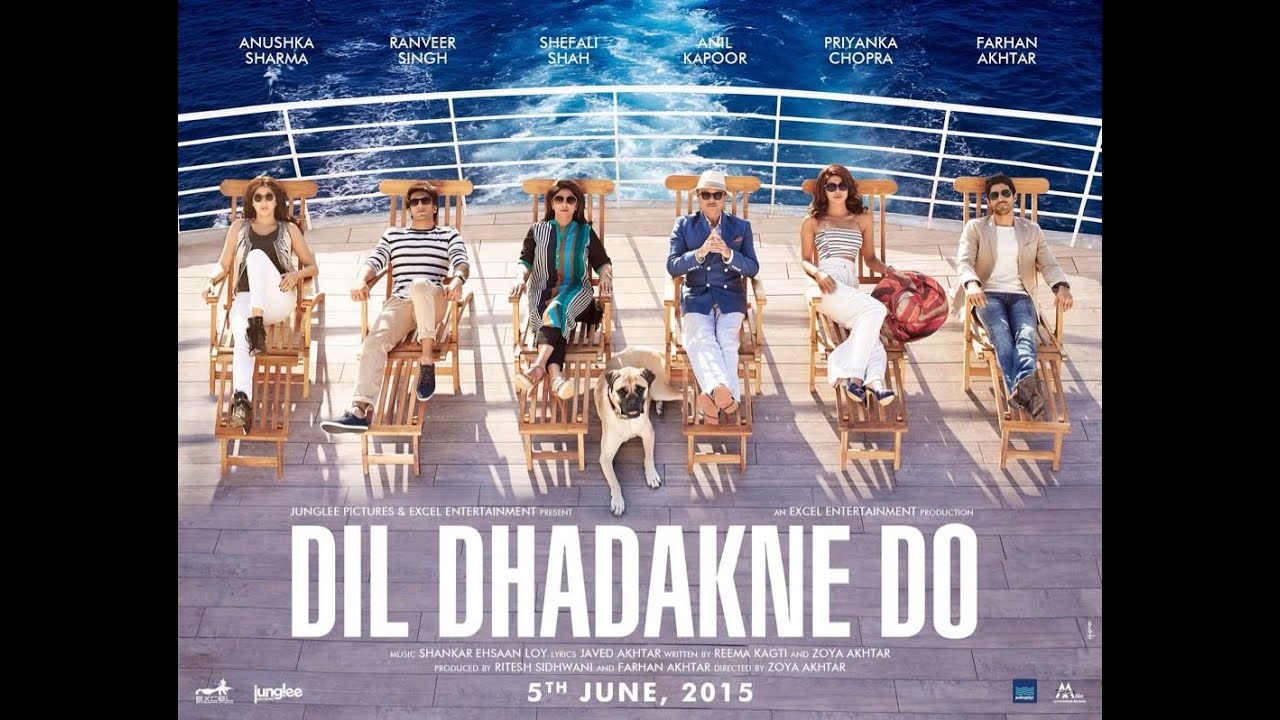
Movie Review -Dil Dhadakne Do


Movie Review -Dil Dhadakne Do


Junglee Pictures and Excel Entertainment’s Dil Dhadakne Do (UA) is a comedy drama set on a cruise ship. Kamal (Anil Kapoor) and Neelam Mehra (Shefali Shah), to the outside world, are a perfect socialite couple but in reality, they can’t stand each other. They have invited their family and close friends on a 10-day cruise around Turkey, in celebration of their 30th wedding anniversary. It is at this party that the seemingly Utopian world of the Mehras starts falling apart, leaving Kamal and Neelam aghast at how the world will judge their personal lives.

Ayesha (Priyanka Chopra), their elder daughter, who is a successful businesswoman, is married to Manav Sangha (Rahul Bose) and it is on this cruise that she tells her parents and Manav and his mother (Zarina Wahab) that she is unhappy in the marriage and, therefore, wants a divorce. Kamal and Neelam are shocked and Kamal actually tells her to think of a divorce at her own risk as she won’t be welcome back into the Mehra family. Neelam Mehra feels, marriage is a journey full of ups and downs and tells Ayesha to adjust rather than thinking about divorce. Also on the cruise is her ex-buddy, Sunny Gill (Farhan Akhtar), who is the son of Kamal Mehra’s trusted manager. Kamal had, some years ago, sent Sunny for further studies to the USA but the real reason for sponsoring Sunny’s education trip was to separate Sunny from Ayesha.

The Mehras’ second child is Kabir (Ranveer Singh), the sole heir to the huge business empire of his dad. He is passionate about flying and his dad has bought him a private jet. The seemingly successful Ayka company of the Mehras has actually hit bad times and is bankrupt because of which Kamal wants Lalit Sood (Parmeet Sethi) to buy a stake in the company and bail him out. But the egotistic Mehra can’t get himself to tell Sood to acquire a stake in the company, more so because Sood is known to be a shark who soon takes control of the companies he acquires a stake in. Therefore, Kamal has invited the Sood family on the cruise with the single intention of setting up his own son and Lalit’s only daughter, Noorie (Riddhima Sud). That way, Lalit’s acquisition of a stake in Ayka would ensure that the control remains within the family only. To the horror of Kamal and Neelam Mehra, however, Kabir falls in love with Farah Ali (Anushka Sharma) whom he meets on the cruise and who is a dancer and a Muslim.

What happens thereafter? Are Kamal and Neelam Mehra able to save their ‘family honour’ from the prying eyes of their socialite-friends even as they grapple to save Ayesha’s marriage and get Kabir to agree to marrying Noorie Sood so that their company can be saved from ruination? Or do Ayesha and Kabir, who are each other’s emotional anchors, revolt against their selfish parents, for whom, society and status are more important than the happiness of their two children?

Zoya Akhtar and Reema Kagti have penned a story which has many layers and at the core of which is the tension within the Mehra family on several counts. The duo’s screenplay keeps the audience engrossed, engaged and entertained but intermittently so. For, in several scenes, Akhtar and Kagti take too long to come to the point and, in the process, end up boring the viewers. Since the entire film is narrated from the point of view of the Mehras’ dog, Pluto, the narration does get monotonous at times, when it starts sounding like a sermon. In fact, the dog’s initial talking gets on the audience’s nerves after a point of time. However, the comedy punches and the inherent humour in the drama, although quite class-appealing, do save the drama. Resultantly, the screenplay emerges like a fresh and entertaining take on relationships but with boring portions in between. The first half has more dull moments than the second half. In fact, the post-interval portion moves at a fast pace as the simmering differences between the four Mehras come to the fore. The ultimate showdown which Kabir has with his father is supremely engaging. Having said that, it must be added that the humour is meant more for the classes and the city audience than the masses and public of the small centres. But the emotional part of the relationship drama is definitely universal.

The comic dialogues by Farhan Akhtar are witty and humorous whereas the dramatic ones are even cutting-edge at times. The dialogues of Pluto have been penned by Javed Akhtar and they are appropriately philosophical and humorous.

Anil Kapoor lives the role of Kamal Mehra and plays the selfish and manipulative business tycoon with elan. It’s a delight to watch his facial expressions and body language moving in synch with his mood, in different situations. Shefali Shah is equally outstanding as Neelam Mehra. She acts with the confidence of a seasoned actress who knows what the audience wants. Ranveer Singh is extraordinary in the role of Kabir Mehra. His layered character unfolds so dramatically because of his superb performance that he absolutely endears himself to the public. Priyanka Chopra is wonderfully restrained as Ayesha Sangha. She plays her character with a lot of maturity and leaves a brilliant mark. Anushka Sharma shines in a brief role. Her conviction comes to the fore in her scenes of a modern girl who knows her priorities. Rahul Bose is outstanding as Manav Sangha who is unable to understand his modern wife. He underplays his character so beautifully that he leaves a lasting impression. Farhan Akhtar is lovely in a special appearance. He looks very handsome and acts with effortless ease. Riddhima Sud is fair as Noorie Sood. Zarina Wahab is fantastic as Manav Sangha’s mother. She makes a lovely mark each time she comes on the screen. Parmeet Sethi, as Lalit Sood, and Dolly Mattoo, as Naina Sood, play Noorie’s parents with confidence. Aamir Khan’s voice acting as the voice of Pluto, the dog, is very fine. Sarah Hashmi is quite nice as Divya Mehra, cousin of Ayesha and Kabir. Khushi Dubey is cute as Putlu Mehra. Pawan Chopra (in the role of Kamal Mehra’s brother Prem Mehra) and Ayesha Raza (as Prem Mehra’s wife, Indu Mehra) act ably. Divya Seth Shah (as Saira Hashmi), Shireesh Kumar Sharma (as Saira’s husband), Ikhlaque Khan (as Amrish uncle), Manoj Pahwa (as Vinod Khanna), Preeti Mamgain (as Vandana Khanna), Vikrant Massey (as Rana Khanna), Vandana Sajnani (as Anju) and Debanshi Shah (as Nitya) lend very good support.

Zoya Akhtar’s direction is mature and she brings to the fore the smallest nuances so beautifully that one can’t help but marvel at her eye for detail. Shankar-Ehsaan-Loy’s music is good but the absence of chartbusting music is sorely felt, especially because the backdrop is a celebration party. The title song and ‘Galla goodiyaan’are the more appealing numbers. The other songs are quite good. Javed Akhtar’s lyrics are both, interesting and meaningful. Choreography of the ‘Galla goodiyaan’ song (by Bosco-Ceasar) is the best. The other song-dances are also well-picturised. Shankar-Ehsaan-Loy and Jim Satya’s background music is lovely. Carlos Catalan’s camerawork is of a high order. The cruise ship, the sea and the foreign locales have all been captured beautifully by him in his camera. Neil Patel’s production design and Chandrashekhar More’s art direction befit the huge canvas of the film. Anand Subaya’s editing is sharp. Production values are rich.

On the whole, Dil Dhadakne Do is a good entertainer for the multiplex-frequenting audience. It will be liked by the youngsters and the classes more than the mass audiences. Business in the cities will be good on the strength of audiences of multiplexes and premium single-screen cinemas. However, business in smaller centres and in lesser single-screen cinemas will be dull. All in all, it will fetch some profits.


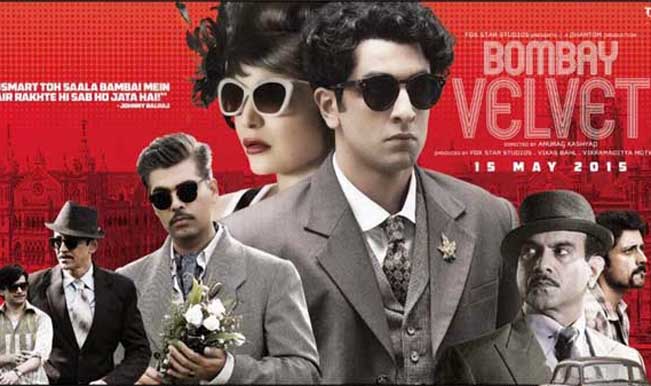
Movie Review - Bombay Velvet

Movie Review - Bombay Velvet

Movie Review - Bombay Velvet
Add caption

Fox Star Studios and Phantom’s Bombay Velvet (UA) is the story of an ambitious young man, Johnny Balraj (Ranbir Kapoor), and is set in Bombay of 1950s and 1960s.
Balraj (master Yash Sehgal) starts out as a young pickpocket when he joins Chiman Chopra (master Siddharth Thakur). The two grow up to be criminals and are thick friends. Balraj is more ambitious while Chiman (Satyadeep Misra) is more careful. One day, businessman Kaizad Khambatta (Karan Johar) takes Balraj under his wings and both, Balraj and Chiman, start working for him. Khambatta is a wheeler-dealer and an opportunist and sees potential in Balraj as an aide who would help him (Khambatta) realise his dreams of making fast and big money.
Khambatta opens a club, Bombay Velvet, for Balraj, whom he rechristens Johnny. Although the investment in the club is Kaizad Khambatta’s, Johnny is the de facto owner for the world.
Rosie Noronha (Anushka Sharma) is a club singer and she soon joins the Bombay Velvet club where she entertains customers. Rosie, a close accomplice of Jimmy Mistry (Manish Chaudhry), has actually been planted in the club by Jimmy so that she can get her hands on the negative of an incriminating photograph taken by Johnny Balraj for Khambatta. The picture shows minister Rao Saheb Desai (Atul Shrivastav) in a compromising position with Khambatta’s own wife. The unscrupulous Khambatta had sent his wife to Desai and had asked Johnny Balraj to click their photographs in bed, so that he could use the same to blackmail him into giving the contract for developing parts of Bombay into a business district. While Johnny Balraj has given the pictures to Khambatta, he keeps the negative with himself so that he can someday blackmail Khambatta too. At Khambatta’s behest, Johnny Balraj also kidnaps trade union leader Deshpande (Sandesh Jadhav) who has been opposing the displacement of mills for the upcoming business district in Bombay.
While working at the Bombay Velvet club, Rosie falls in love with Johnny Balraj who also loves her. Rosie, therefore, refuses to oblige Jimmy Mistry and doesn’t give him the negative. Khambatta and Jimmy Mistry are old rivals and they both own newspapers. Another photograph of Khambatta hobnobbing with Bombay mayor Romi Mehta (Siddhartha Basu) and others, gets leaked to the media, much to the embarrassment of Khambatta. That’s when Khambatta accuses Rosie of being Jimmy Mistry’s mole and he asks Johnny Balraj to kill her.
Johnny Balraj carries out Khambatta’s order and plants a bomb in Rosie’s house but he saves her before the explosion, while planting another girl there so that it appears to the world, and to Khambatta, that Rosie has died.
Police officer Vishwas Kulkarni (Kay Kay Menon) is investigating the disappearance of trade union leader Deshpande and also gets involved in the Rosie murder case. He is also in charge of the disappearance of a photographer (Akash Vijay Dabas) who was last seen at Bombay Velvet club. Obviously, therefore, Vishwas Kulkarni interacts with Johnny Balraj. Meanwhile, Johnny Balraj has become over-ambitious now and wants a share in profits from the development contract bagged by Khambatta. Obviously, Khambatta is not happy with Johnny Balraj’s thinking.
Johnny Balraj and Khambatta now start working at cross-purposes. One day, Khambatta orders Johnny Balraj’s execution and asks the latter’s bosom pal, Chiman, to do the job. When he learns of this, Johnny Balraj is livid and thirsting for Khambatta’s blood. In the meantime, police officer Vishwas Kulkarni becomes aware that Johnny holds the key to a lot of criminal activity going on and is, therefore, hot on his trail. Khambatta, in any case, wants Johnny Balraj dead.
So what happens finally? Who kills whom and how?
The film is based on an original story by Gyan Prakash. The script has been written jointly by Gyan Prakash, Thani, Vasan Bala and Anurag Kashyap with additional writing by Gul Dharmani, Megha Ramaswamy and Anubhuti Kashyap. The story and screenplay are ridiculously weak and the first half actually tests the audience’s patience because it is not only disjointed but also moves at an excruciatingly slow pace. The speed picks up after the interval but the whole drama fails to involve the audience which, therefore, ends up only dispassionately watching it unfold. There is no sense of belonging which the viewers experience. Also, there is hardly a happy moment in the film or even an entertaining one. Every character is either a crook or has depression written on his/her face, making it seem like the world has no right people at all.
The second half of the film becomes like a routine vendetta drama seen in hundreds of earlier films. The whole track of development of Bombay city is so sketchily written that terms like Nariman Point and Backbay Reclamation will not even be understood by those living outside Bombay. In effect, the writers have treated the crux of the story so shabbily and so half-heartedly that their absolute lack of application of mind and slacker attitude is there for all to see. It wouldn’t be wrong to say that there are hardly any scenes which would bring even a smile to the viewer’s face, leave alone make him laugh. In other words, the drama and the whole atmosphere in which it unfolds, is morose and depressing.
The script is also one of complete convenience. Kaizad Khambatta is shown to be a smart wheeler-dealer but he is such an idiot that he blackmails the minister with pictures showing him (minister) in a compromising position with his (Khambatta’s) own wife. What if the minister were to turn around and tell Khambatta that in exposing him (minister), Khambatta also stood to be hopelessly exposed? Is Khambatta so hard-pressed for money that he can’t afford to pay a girl of easy virtues to share the bed with the minister if only for the purpose of clicking the photographs? Again, Khambatta is supremely smart but has no idea that a romance is brewing between Johny Balraj and Rosie right in his club! Johny Balraj announces to the world that Rosie is dead but loses no time in introducing her identical twin sister as if he is convinced that the world is full of dumb people who’d buy his story of twin sisters. Wouldn’t common sense prompt Johnny Balraj to keep Rosie or rather whom he calls Rosie’s twin, far from the prying eyes of the people who know him. All in all, the writers seem to be in a defiant mood and have gone ahead and done whatever has appealed to them without really caring for what the audiences would feel. There are stereotypes in Hindi cinema and there are stereotypical situations and characters, and if the large team of writers thought it would break the stereotypes, it ought to have come up with at least a sensible story. One cannot hope to break the stereotypes with a half-baked and absolutely dishonest script as that of Bombay Velvet. Dialogues, penned by the writing team, are good only at a few places. Otherwise, even they are routine and commonplace.
Before talking about the performances of the stars, let it be said that one expects nothing short of outstanding work from the actors in a film of the scale of Bombay Velvet, what with Rs. 90 crore having been spent on its making. But not a single actor stands out with a landmark performance. Ranbir Kapoor is good in the role of Johnny Balraj and puts in sincere work. He has taken care to look like a young man of the 1960s and his hairstyle suits him. Anushka Sharma’s only job in the film seems to be singing songs or crying. She is alright. Karan Johar performs fairly well as villain Kaizad Khambatta. Satyadeep Misra is earnest but doesn’t get a single meaty scene to show his talent. Kay Kay Menon is first-rate as police officer Vishwas Kulkarni. Siddhartha Basu has his moments as Romi Mehta. Vivaan Shah is okay as Tony. Sandesh Jadhav (in the role of Deshpande), Jagdish Rajpurohit (as commissioner of police), Remo Fernandes (as the Portuguese man), Akash Vijay Dabas (as the photographer), Denzil Smith (as Larsen), Vicky Kaushal (as Basil), Varun Grover (as the emcee), Shanti (as Khambatta’s wife), Sarika Singh (as Chiman’s wife), Prerna Tiwari (as Jimmy Mistry’s wife), Atul Shrivastav (as Rao Saheb Desai), master Yash Sehgal (as young Balraj), master Siddharth Thakur (as young Chiman) and baby Tanya Sharma (as young Rosie) lend average support. Raveena Tandon adds glamour value as the club singer. Others are alright.
Anurag Kashyap’s direction fails to cut the ice with the audience. Like the script, which has niche appeal, his narrative style will be liked by a very thin section of the audience only. For the large mass base of audience, the script as well as the direction would afford little excitement or meaning. Amit Trivedi’s music is another major minus point. The Jazz base of the music wouldn’t find favour with the youngsters. A couple of songs, particularly ‘Fifi’ (remixed by Mike McCleary) and ‘Mohabbat buri bimaari’ (also by Mike McCleary) and ‘Behrupiya’ (Amit Trivedi) are well-tuned but, as mentioned above, they have their limitations for the youth of today. Amitabh Bhattacharya’s lyrics are alright. Choreography of the songs by Ashley Lobo is in keeping with the era in which the film is set. Amit Trivedi’s background music is appropriate. Rajeev Ravi’s cinematography is wonderful. Chuck Picerni Jr.’s action scenes are okay. Sameer Sawant’s art direction and Sonal Sawant’s production designing is excellent. Visual effects deserve special mention. Editing by Thelma Schoonmaker and Prerna Saigal leaves something to be desired.
On the whole, Bombay Velvet is a colossal waste of money and resources. It is devoid of entertainment value and will, therefore, fail miserably at the box office. There is nothing velvet-like about it. Rather, it is as coarse as unprocessed jute.


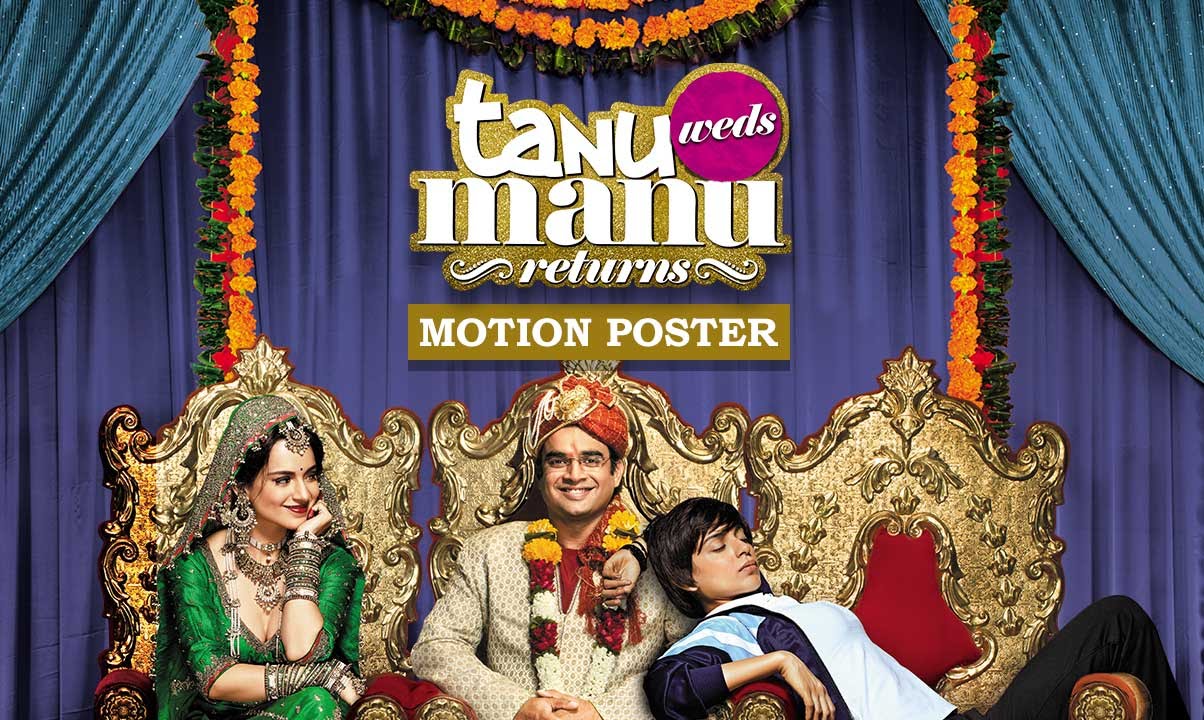
Movie Review Tanu Weds Manu Returns


Movie Review Tanu Weds Manu Returns 

Movie Review Tanu Weds Manu Returns


Eros International and Colour Yellow Productions Pvt. Ltd.’s Tanu Weds Manu Returns(UA) is a sequel to Tanu Weds Manu. Tanu (Kangana Ranaut) and Manu (R. Madhavan)Ohave been married for four years now and they live abroad. They have fallen out of love and both visit a team of psychiatrists to see if there is a possibility to improve matters but as bad luck would have it, Manu is taken to be suffering from a mental disorder, by the team of doctors and, therefore, put in a mental asylum. The bold Tanu leaves him to fend for himself and returns to her parental home in India. She informs his friend, Pappi (Deepak Dobriyal), who lives in India, about Manu’s state.
Pappi reaches London and gets Manu released from the mental asylum and the two of them return to India. One day, quite by chance, Manu sees a look-alike of Tanu and mistakes her for his estranged wife. But she turns out to be Kusum alias Datto (Kangana Ranaut), who hails from Haryana and studies in Delhi. She is an athlete. Manu falls in love with Kusum due to her looks which resemble Tanu’s. Slowly but surely, Kusum also reciprocates even though she knows that he is a married man. Meanwhile, Manu has sent Tanu a legal notice more with the intention of initiating talks with her for a rapprochement. Tanu’s lawyer, without her knowledge, replies to that by sending Manu a legal notice for divorce. Tanu has, in the meantime, touched base with Raja Awasthi (Jimmy Shergill) who was madly in love with her and had wanted to marry her.
As it turns out, Kusum alias Datto is to marry Raja Awasthi who has chosen her solely because she resembles Tanu. All hell breaks loose when Tanu learns of Manu’s plans to marry Kusum. She confronts both, Manu and Kusum, but is unable to stop the marriage.
What happens then? Does Manu marry Kusum? Or does Raja Awasthi succeed in stalling the wedding?
Himanshu Sharma has written an excellent story with twists and turns galore to keep the audience involved and engaged throughout the drama. The characterisations are superlative and nobody moves out of his character ever. Himanshu Sharma’s screenplay is extraordinary and is laced with excellent humour which keeps the viewers thoroughly entertained. The screenplay is so interesting, engaging and humorous that it appears to be almost flawless. The best part is that the screenplay involves audiences of every class and every age group and both, men and women. The opening scene itself is so interesting that the audience is completely taken in. The interval point is lovely and the second half also begins so brilliantly that it sets the stage for excitement galore once again. An enviable point about the screenplay is that it progresses very smoothly and there’s not a single scene which appears forced or out of place. Similarly, the entire drama unfolds so remarkably seamlessly that it doesn’t look one bit like it has been created! The simplicity and honesty with which the drama unfolds on the screen is yet another plus point. There are a number of scenes which remain with you long after the film is over. The opening scene of the film, the scene in which Kusum’s brother is prevented by another brother from setting Manu and Pappi on fire, the scene in which Tanu confronts Manu and Kusum, the scene in which Tanu, in a drunken state after the humiliation she faces in her confrontation with Manu and Kusum, roams around on the streets, the scene in which Tanu confronts Manu, the scene in which Manu and Kusum are getting married in the presence of Tanu, the entire sequence in which Kusum tries to help Pappi get the girl he loves, the scene in which Manu meets Raja Awasthi, the climax sequence.... the list is long, very long. Another fantastic point about the screenplay is that although Tanu and Kusum are on two different ends of the spectrum and Manu is at the centre, the audience’s sympathy goes to all three. That’s the victory of the writer!
Himanshu Sharma’s dialogues are gems. They go straight to the heart and strike a chord. If the witty dialogues evoke laughter, the weighty ones prompt the audience to clap. In fact, there are a number of clapworthy scenes as well as dialogues.
  1. Madhavan does a splendid job. Any actor could’ve easily gone overboard in the role, which would have reduced the impact of his performance, but R. Madhavan steers completely clear of overacting. As he has minimum dialogues to mouth, he has very intelligently used his body language, facial expressions and eyes to convey his feelings and his predicament and state of mind. Kangana Ranaut delivers yet another rivetting and award-winning performance, this time in a double role. So sensational is her acting that it is difficult or almost impossible to conclusively decide whether she is better as Tanu or Kusum. She gets into the skin of both the characters so effortlessly that it is difficult to imagine any other actress doing so as beautifully as her. With this film, Kangana proves that there is none quite as good as her. The Haryanvi language spoken by Kangana for Kusum’s character is lovely and is yet another plus point. If Kangana is endearing in light scenes, she is superb in emotional and dramatic ones too. Her dance in the ‘Banno’ song is memorable. The costumes worn by her as Tanu (designed by Reza Shariffi) are colourful and striking. Jimmy Shergill underplays marvellously as Raja Awasthi. He is very cute. Deepak Dobriyal deserves the highest praise for his endearing and entertaining performance as Pappi. He evokes laughter every time he comes on the screen and his sense of timing is outstanding. Swara Bhaskar shines as Payal. Although she gets limited scope, she leaves an indelible mark in people’s minds whenever she speaks. Eijaz Khan, as Payal’s Sardar-husband, provides good support. Mohd. Zeeshan Ayub makes his presence felt just too beautifully in the role of Tanu’s lawyer. Rajendra Gupta is excellent as Tanu’s father. As Tanu’s mother, Navni Parihar is very good. K.K. Raina makes his mark as Manu’s father. Dipti Misra is also lovely in the role of Manu’s mother. Rajesh Sharma is just too good as Kusum’s brother. Rahul Shanklya (as Kusum’s brother who lives in Haryana), Deepak (as Aakash Dahiya in a special appearance), Guneet Kaur (as Komal whom Pappi loves), Manu Rishi (as lawyer Fazal) and the others lend able support.
Aanand L. Rai’s direction is superb. For one, his narrative style is simple and he caters to every class of audience. Secondly, he doesn’t let boredom creep in for even a minute. Thirdly, he has recreated the atmosphere of a family drama splendidly. Fourthly, the recreation of the various cities/towns/villages is first-rate. Fifthly, his narration is honest to the core. And sixthly, he has extracted great and noteworthy performances from out of his cast members. Music (Krsna, Tanishk-Vayu and Surj-RDB) is good but could’ve been better. Of course, the ‘Banno’ song (by Tanishk-Vayu) is a hit number. Lyrics (by Raj Shekhar, Vayu and Surj-RDB) are very meaningful. Song picturisations (by Bosco-Caesar and Saroj Khan) are good; the choreography of ‘Banno’ song is remarkable. Krsna’s background music deserves distinction marks. Chirantan Das’ cinematography is terrific. Javed-Eijaz’s action scenes are beautifully choreographed. Wasiq Khan deserves kudos for his production designing. Hemal Kothari’s editing is razor-sharp and the results are praiseworthy.
On the whole, Tanu Weds Manu Returns is a sureshot super-hit film. It has entertainment for all sections of the audience and for all age groups. It also has tremendous repeat value. Ladies and youngsters, especially, will adore the film.

Adsense Leadboard